

The Impact of Climate Change on Residential Properties
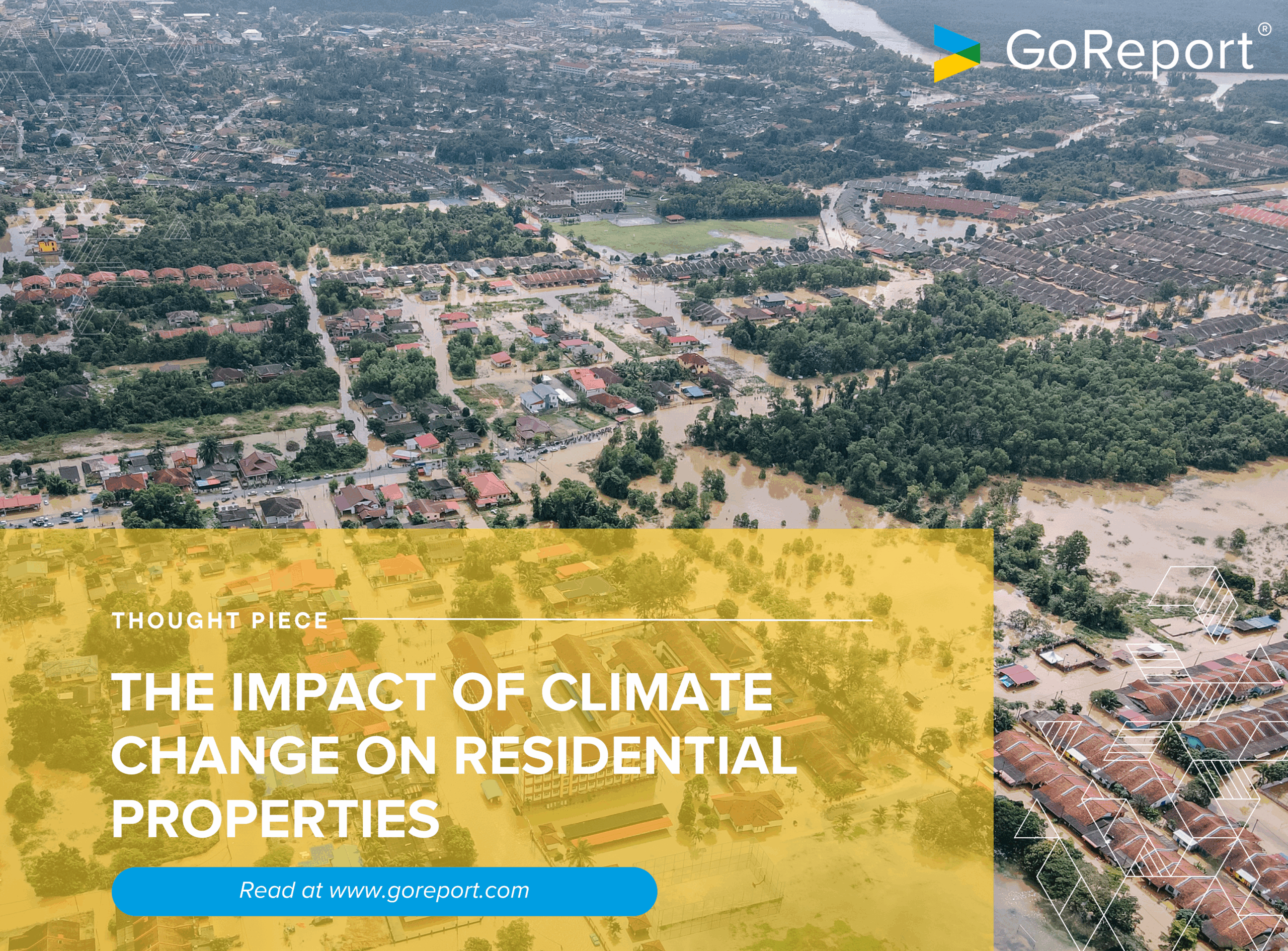
Ask any experienced residential surveyor what’s changed most in the past decade, and you’ll get a range of answers – digital tools, lender expectations, client awareness. But increasingly, climate is creeping into that list. Not just in the abstract, academic sense, but as something you can see, feel, and measure on the ground. Rot in the roof space that wasn’t there three years ago. Brickwork bowing in the heat. Flood maps quietly redrawn. Surveyors are absorbing the implications, but often without enough conversation around what it really means for how they work.
There’s a strange paradox here. Climate change is at once too big and too local. Too slow-moving for the news cycle, too fast-moving for the planning system. For residential surveyors who work in the trenches of private housing stock, it’s become the silent variable in nearly every job.
So how do you read the signs, adjust our methods, and keep clients well-informed without slipping into speculation? That’s the crux of it. Surveys need to think about tuning into what’s already visible and learning how to bring technical clarity to a very human concern: the safety, stability, and future value of someone’s home.
Climate Risks Are Becoming Property Risks
For years, climate change in residential surveying was mostly shorthand for flood risk. It was box-tick territory: search the map, note the EA rating, flag if necessary. Now, that feels narrow. We’re seeing an uptick in properties suffering from structural movement due to prolonged dry spells, homes that can’t cope with extreme temperature swings, and external materials breaking down faster than their estimated lifecycle.
And the old distinctions – between floodplain and not, north and south, rural and urban – don’t hold up like they used to. A terraced house in Manchester with a cracked render due to heat expansion might have more in common with a coastal bungalow in County Down than with the semis on the same street. Microclimates, drainage infrastructure, and even tree root behaviour are all shifting in ways that are hard to model but impossible to ignore.
Surveyors are noticing and seeing:
- More frequent reports of thermal stress on older masonry.
- Subtle seasonal movement in properties that previously had none.
- Moisture behaviour in roof voids that doesn’t align with ventilation standards.
- Retrospective damp treatments failing faster in homes built pre-1950.
Rather than just being anecdotal, this is pattern recognition across hundreds of surveys over time. While much of it doesn’t fall neatly under existing survey templates, it’s becoming harder to keep it out of the conversation.
Are Our Existing Standards Keeping Pace?
Let’s be honest: formal guidance tends to lag behind lived experience. RICS updates, building regs, lender guidance are all built for consensus, not speed. That’s understandable, but it sometimes leaves surveyors in a tight spot. You spot signs of climate-related wear, but the Red Book or Home Survey Standard doesn’t explicitly frame them that way. So do you flag it? Do you caveat it? Do you say what you think or what you know?
The tools you use, be they reporting software, inspection frameworks, or drone tech, should support, not suppress, your ability to think critically and document what you see, not just what’s prescribed.

Talking to Clients Without Causing Alarm
Residential clients vary wildly in their awareness. Some are reading IPCC reports and worried about embodied carbon. Others just want to know if the crack in their wall means their extension is a write-off. Your role isn’t to politicise or downplay, it’s to contextualise.
Framing is everything. For example:
- Rather than saying, “This property may be vulnerable to climate change impacts,” try “We’re seeing properties of this type increasingly affected by changes in weather patterns, so here’s what to watch for.”
- Instead of speculating about future flooding risk, say, “This home isn’t in a designated flood zone, but drainage appears to be under pressure. Here’s what that could mean during heavy rainfall.”
You’re not trying to forecast the climate, but rather offer situational awareness rooted in what’s already observable. Think of it like damp: it’s not your job to model future mould growth, but you flag the conditions that make it more likely. It’s worth remembering that calm, grounded reporting doesn’t make the issue less serious. It makes you more trustworthy.
Practical Adjustments You Can Make Right Now
A few small shifts can make our work more climate-aware, without extending time on site or overwhelming the client with theory. Here’s what some surveyors are already doing:
- Noting seasonal context in photos and comments: What looks fine in July might struggle in January.
- Revisiting assumptions about thermal performance in materials tested pre-climate stress norms.
- Double-checking historic drainage features that may be coping with runoff volumes they weren’t designed for.
- Recording vegetation pressure with climate shifts in mind, roots now grow deeper, faster, and harder.
- Factoring in ventilation and moisture in a hyper-variable climate especially in lofts and subfloors.
It’s also worth looking at how your templates, condition ratings, and phrasing tools can better reflect uncertainty. Not to hedge, but rather to signal what’s changing, what’s stable, and what may need watching.
Staying Alert over Being Perfect
Climate change isn’t a single risk, instead it’s a background multiplier that raises the stakes of almost every defect, every omission, every missed clue. That doesn’t mean every report needs to carry a climate section, but it does mean every surveyor should feel confident recognising the signs, understanding the context, and speaking clearly to clients.
We’re at a point now where climate awareness in residential surveying is a professional strength, not a fringe concern. And like any strength, it grows with use, through curiosity, pattern-spotting, and peer conversation.
The real impact of climate change on residential property isn’t always dramatic. It’s slow render creep. It’s a swelling door frame. It’s condensation patterns that don’t make sense anymore. But behind these symptoms is a quiet demand for smarter surveying. Not more technical. Just more awake.
At GoReport, we work closely with surveyors who are adjusting their eyes and methods to reflect this shifting landscape. Our reporting tools are designed to support those instincts, not override them, so you can document, reflect, and inform with confidence.
Try a GoReport demo and see how flexible reporting supports sharper insight, especially when the rules are still catching up.

FAQ: Residential Surveyors and Climate Change
Are surveyors expected to assess climate risk?
Not formally, unless instructed, but you are expected to use your professional judgment to flag any visible risks that may affect condition, safety, or value.
What if I notice signs of heat damage or drought movement, but it’s not in my template?
Record what you see in plain language. You don’t need a formal category to comment on deterioration. Consider adding context about how patterns are changing in similar properties.
Do clients care about climate risks?
Some do, deeply. Others don’t until it costs them. Your role isn’t to predict the future, but to help them make an informed decision about the property as it stands, including its ability to withstand changing conditions.
Should I mention flood risk if it’s not flagged on the search?
If your site observations suggest poor drainage, high runoff potential, or nearby developments altering flow, then mention it. Not as a prediction, but as a practical concern.




Getting started with GoReport
Whether you’re a sole trader, a multi-surveyor practice, or part of a global organisation, we’re ready and waiting to start your digital journey.