

Penetrating Damp: How Surveyors Should Identify, Assess and Report It
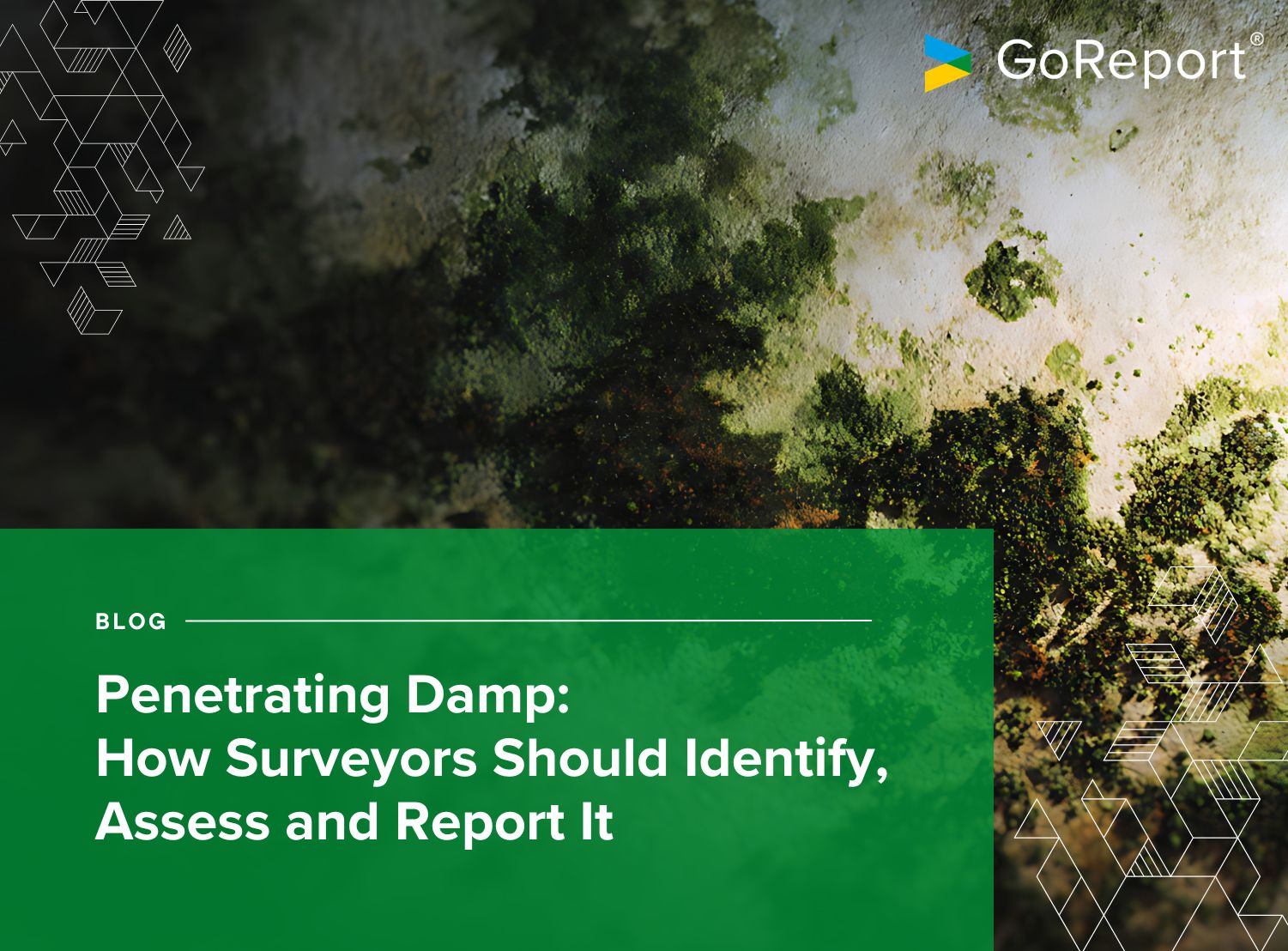
Penetrating damp is one of the most common issues identified during property inspections, yet it is often one of the least clearly communicated in survey reports.
For many clients, damp simply signals “a problem.” For surveyors, however, it represents a more nuanced challenge, one that requires accurate diagnosis, clear explanation, and well-structured reporting.
As expectations around reporting continue to rise, the ability to assess and communicate penetrating damp effectively is becoming increasingly important. It is no longer enough to identify symptoms. Clients want to understand cause, risk, and what happens next.
What Is Penetrating Damp?
Penetrating damp occurs when water enters a building through external defects. Unlike rising damp, which travels upwards from the ground, penetrating damp can appear at any level of a property and is typically linked to the building envelope.
Common causes include defective brickwork, damaged pointing, cracked render, blocked or leaking guttering, and poorly sealed windows or doors. In some cases, it may also be associated with design issues, such as inadequate overhangs or exposure to prevailing weather conditions.
The key point is that penetrating damp is usually driven by external factors. It is often intermittent, becoming more visible during periods of heavy rainfall, and can vary significantly depending on the condition of the building.
Why It Matters in Surveying
At first glance, penetrating damp may appear to be a relatively minor defect. In many cases, the solution may be straightforward, repair the source of water ingress and allow the structure to dry.
However, the implications can be more significant if the issue is not properly assessed.
Persistent moisture can lead to timber decay, internal damage to finishes, and deterioration of building materials over time. It can also mask deeper issues within the structure, particularly if the root cause is not immediately visible.
From a client perspective, damp often raises concern regardless of severity. It can influence purchasing decisions, impact negotiations, and create uncertainty around future maintenance costs.
This is why clarity in reporting is essential. A well-structured assessment not only identifies the issue but helps the client understand its significance.
Using structured survey reporting ensures that observations are consistently linked to cause, risk, and recommended action, reducing ambiguity and improving decision-making.
Identifying Penetrating Damp in Practice
Diagnosing penetrating damp is rarely about a single observation.
Surveyors must consider a combination of visual indicators, environmental conditions, and building characteristics. Signs such as localised staining, damp patches on walls or ceilings, peeling paint, or plaster deterioration can all point towards water ingress. However, these symptoms are not exclusive to penetrating damp.
The challenge lies in distinguishing it from other forms of moisture, such as condensation or rising damp. This requires a careful assessment of location, pattern, and likely sources of water.
External inspection is particularly important. Defects in the building envelope, whether in roofing, masonry, or drainage systems, often provide the clearest indication of cause.
Consistency in how this information is captured is key. Without a structured approach, important details can be missed or interpreted differently across reports.
This is where digital survey reporting software supports surveyors by standardising data capture and ensuring that all relevant observations are recorded systematically.
From Observation to Explanation
One of the most common shortcomings in damp reporting is the gap between observation and explanation.
A report may note the presence of damp but fail to clearly articulate why it is occurring or what it means for the client. This leaves room for misinterpretation and often leads to follow-up queries.
Strong reporting bridges this gap.
It connects what is seen on site with a clear narrative around cause, impact, and next steps. It explains not just that damp is present, but how it has occurred, whether it is likely to worsen, and what action should be taken.
This level of clarity is becoming a baseline expectation.
Firms that prioritise improving survey report consistency are better able to deliver this, ensuring that every report follows a logical, repeatable structure that clients can easily understand.
Communicating Risk Clearly
Not all cases of penetrating damp carry the same level of risk.
Some may be minor maintenance issues, while others may indicate more significant problems with the building fabric. The role of the surveyor is to make that distinction clear.
This is where many reports fall short. Either the issue is understated, leading to future surprises, or it is overstated, creating unnecessary concern. Clear risk communication requires balance.
It involves assessing the severity of the issue, considering its potential progression, and explaining the likely implications in practical terms. Clients do not need technical detail for its own sake they need to understand what it means for them.
A structured approach to reporting makes this easier, allowing risk to be communicated consistently across different properties and surveyors.
The Role of Technology in Damp Reporting
As reporting demands increase, technology is playing a more prominent role in supporting surveyors.
By structuring how data is captured and presented, digital tools reduce variation and improve clarity. They ensure that key elements, such as location, cause, risk, and recommendation, are always included and clearly linked.
This not only improves the quality of individual reports but also creates a foundation for wider insights.
Over time, consistent data can be analysed across portfolios, helping identify recurring issues, patterns of deterioration, and areas of risk.
It also enables the integration of AI in surveying workflows, where structured data can support quality checks, highlight inconsistencies, and improve overall reporting standards.
Importantly, this does not replace the surveyor’s role. It enhances it, providing better tools to support professional judgement.
Looking Ahead: Raising the Standard of Damp Reporting
Penetrating damp may be a common issue, but it highlights a broader shift within the surveying profession.
Clients are no longer satisfied with reports that simply describe defects. They expect clear, actionable insight that helps them make informed decisions.
This requires a more consistent and structured approach to reporting, one that connects observation, analysis, and recommendation in a way that is easy to follow.
Surveyors who can deliver this will not only improve the quality of their reports but also strengthen their value to clients.
Final Thoughts
Penetrating damp is rarely just about moisture. It is about how effectively surveyors can identify the cause, assess the risk, and communicate the outcome.
As the profession continues to evolve, the ability to deliver clear, consistent, and structured reports is becoming just as important as technical expertise.
By combining strong inspection skills with tools like digital survey reporting software and a focus on structured survey reporting, surveyors can move beyond simply identifying issues and start delivering insight that truly supports decision-making.



Getting started with GoReport
Whether you’re a sole trader, a multi-surveyor practice, or part of a global organisation, we’re ready and waiting to start your digital journey.